
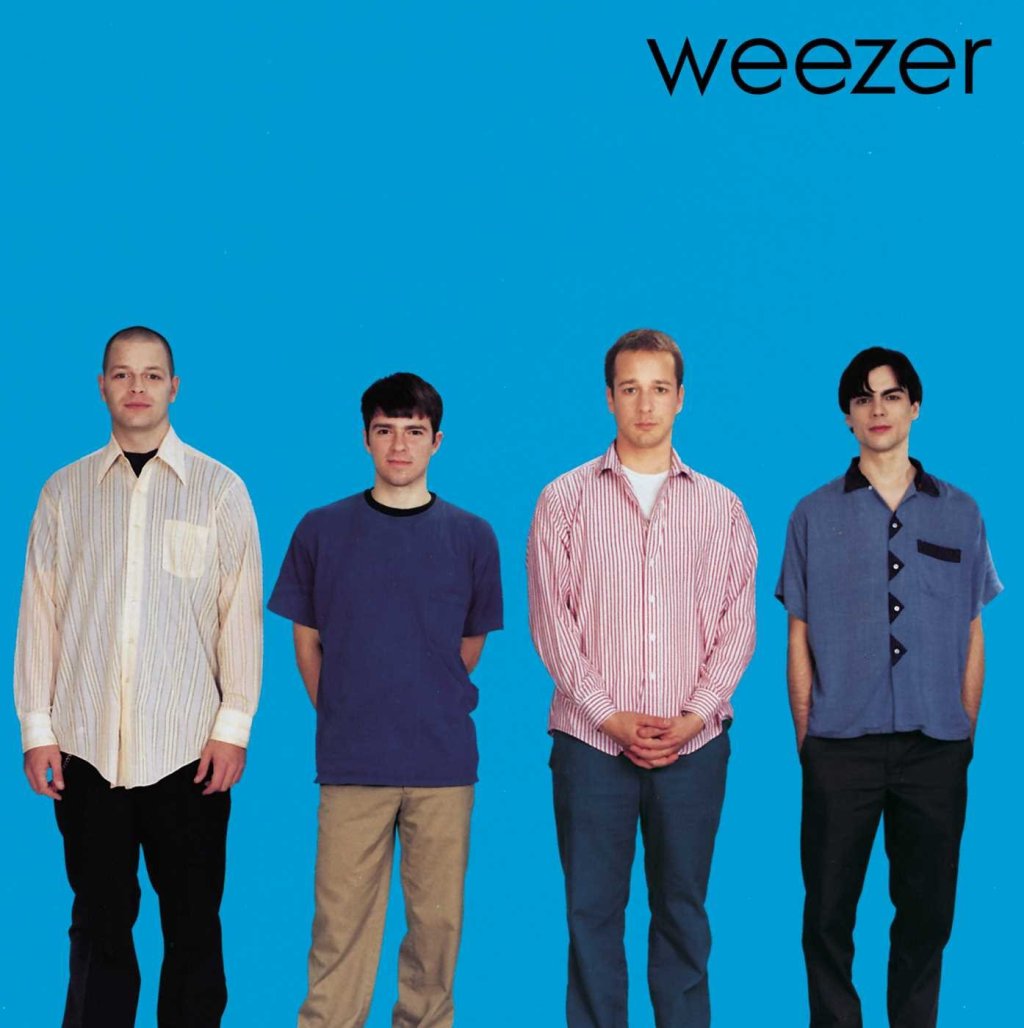
In Billy Joel fashion, artists have huge pressure to “get it right the first time” with their debut singles and album. First outings make or break careers, at best landing bands recording contracts and waves of fans and at worst a life sentence to a 9-5. Occasionally, a debut album has the power to define a band, a genre, and an era of music, serving as a constant pillar of comparison for an entire generation of artists’ subsequent releases, including the band itself. Such is the blessing and curse of Weezer’s seminal self-titled debut album, now colloquially known as the Blue Album.
Weezer came up at the perfect time, MTV looking for a new acts amidst grunge’s implosion in 1994. Lead singles “Undone – The Sweater Song”, “Buddy Holly”, and “Say It Ain’t So” took over MTV with hit music videos and an upbeat alternative sound likened to a new, emo, Beach Boys. Within a year Blue had gone triple platinum, and almost 30 years later it’s widely regarded as a definitive addition to the alternative rock canon, a major influence behind the emo genre, and a must-listen for any music fan.
Blue feels like a 70s rock revival, but the good kind, with guitar and bass working in unison to power each track. Rivers Cuomo reclaims the guitar solo from heavy metal, lending immense energy to the Weezer formula. The band’s Harvard background shines through in their nerdy lyrics, the songs becoming anthems for geeks and outcasts. In the context of Labor Day, however, the album can take on new meaning as an ode to the working man that the holiday celebrates.
The album opens with the protest hymn “My Name is Jonas” – a song that depicts the unsafe working conditions that construction workers face in spite of years of progress by labor-rights movements. We find our narrator at odds with his surroundings in the capitalist world he inhabits, now jaded by his experiences as an employee in an endless cycle of work (“The choo-choo train left right on time / A ticket cost only your mind”). This is followed up by “No One Else”, which at first reads like the misogynistic wishings of a insecure boyfriend, but through a Marxist lens can be seen as the ramblings of a man so burdened by capitalism that all he knows and all that he preaches is conformity, life stripped of any joy so that all one can do is work. “The World Has Turned and Left Me Here” continues the dismal tone through the first part of the album, as our narrator continues to feel dejected and separated from humanity under the weight of capitalism.
The next three songs, “Buddy Holly”, “Undone”, and “Surf Wax America” represent the narrator’s escape from the system; through means of protest, severance from society, or something else remains unclear. He enters a personal Renaissance, joined with his “Mary Tyler Moore” which could be a metaphor for economic freedom rather than a love interest. These three tracks show off how fulfilled and happy our narrator could be without the chains of labor in his new way of life, seen in the chorus of “Surf Wax America” (“You take your car to work, I’ll take my board / And when you’re out of fuel, I’m still afloat”).
Alas, all is not well for our narrator as we reach the album’s best song “Say It Ain’t So”. It seems here that our hero is pulled back under the grip of oppression, which could either mirror the labor movement’s struggles against anti-union ideals from mega corporations and conservative politicians or that the previous run of songs was just fictional escapism. The final three tracks are an ode to what could be: the narrators ideal society free of capitalist intervention (“In The Garage”), depictions of how he wish he could spend his life instead of at work (“Holiday”), and at last a dejected lament acknowledging his dreams of owning the means of production may never come true (“Only in Dreams”).
As we all get ready to head back in to work after Labor Day, throw on Weezer’s Blue Album for your morning commute and strive to do the bare minimum, since that is all your employer will ever do for you.
 gone gazing
2 responses to “Weezer (Blue Album) | Album Review and Marxist Reading”
[…] the full review and analysis here, but you should know the deal. It’s Blue. It’s perfect. It’s a top 5 debut album […]
LikeLike
[…] experimentation in musical forms and sweeping styles, Stewart has always cited diverse names, from The Blue Album to Krzysztof Penderecki as unconsciously influencing the makeup of each project’s […]
LikeLike